Smart Vending Payments, Telemetry and Cybersecurity Checklist
Smart vending cybersecurity decisions should begin with the project owner's use case,…

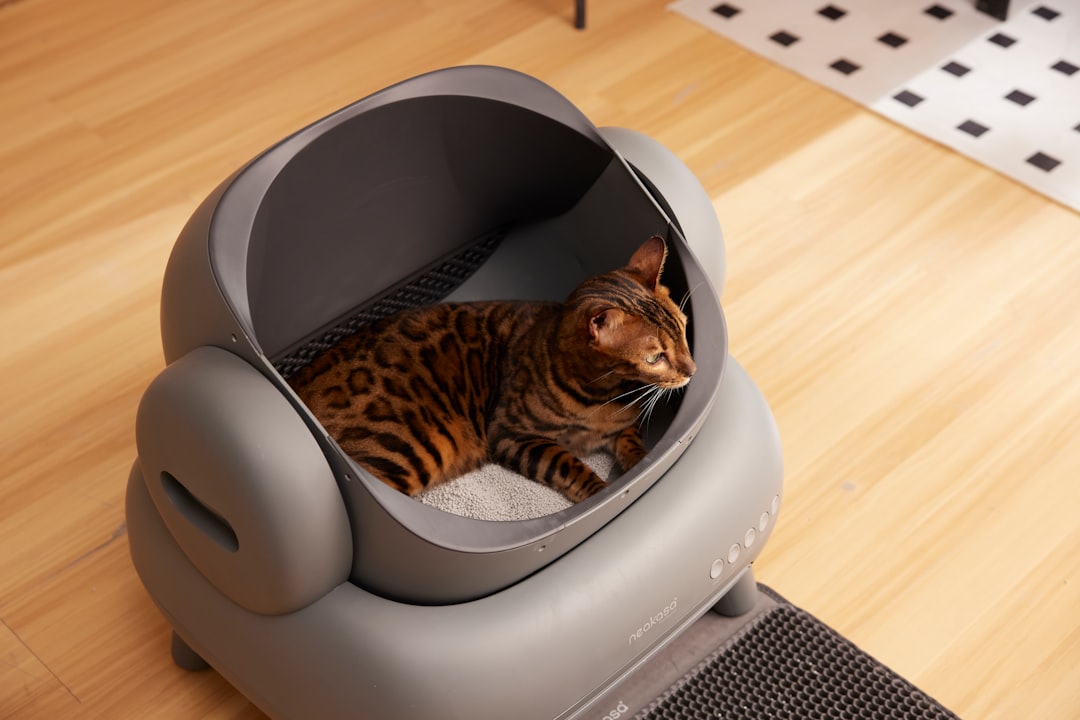
The single biggest demand driver behind the 24 percent annual growth in the automatic cat litter box category is the rise of multi-cat households. In 2026, 38 percent of US cat owners have 2 or more cats, up from 31 percent in 2018. In the EU the number is 33 percent, in Japan 28 percent, in Australia 35 percent. Multi-cat owners face a hygiene problem that a traditional litter tray simply cannot solve: beyond 2 cats, the manual scooping burden crosses into “unacceptable lifestyle friction” territory. The automatic self-cleaning cat litter box is the first real solution. For a B2B buyer, the multi-cat household is the single most important buyer persona to design, market and sell for. Written from Hefei, China, by Eviehome (Hefei Ecologie Vie Home Technology Co., Ltd.).
A single cat uses a litter box 3 to 5 times per day. Two cats = 6 to 10 visits. Three cats = 9 to 15 visits. The manual scooping burden scales linearly: with 3 cats, you are scooping 10+ times per day to keep the box clean enough that the cats will actually use it. Cats are famously picky about litter box cleanliness, and multi-cat households frequently report one cat “avoiding the box” because it is not clean enough, which leads to the dreaded “going outside the box” behavior.
Traditional solutions include: buying multiple litter boxes (2 per cat is the vet recommendation), using a bigger tray, using higher-grade clumping litter, or committing to daily scooping. None of these fully solve the problem for households with 3+ cats.
An automatic self-cleaning cat litter box with an 8 to 14 liter drum and a sealed waste drawer changes the math. The drum rotates after each cat visit, so the next cat always enters a clean litter surface. The waste drawer only needs to be emptied once every 5 to 10 days depending on the number of cats. The total human labor time drops from 10 minutes per day to 3 minutes per week.
Four structural forces push the multi-cat segment:
The 2020 to 2022 remote work wave drove a 25 percent spike in cat adoption in the US. Many households that adopted their first cat during lockdown adopted a second cat within the next 18 months to keep the first cat company. By 2026, those double-cat households are 4 to 5 years into cat ownership, they are confident cat owners, and they are the exact demographic that buys automatic cat litter boxes.
Cats are the ideal apartment pet. As urban apartments get smaller (the average US urban apartment shrunk 8 percent since 2014), multi-cat households need a more space-efficient litter solution. A single big automatic box takes less floor space than two or three traditional trays.
Cat content is a huge slice of social media (cat TikToks alone have trillions of views). Owners who post their cats on Instagram and TikTok invest in premium products as an extension of their pet’s public identity. The automatic cat litter box is a visible status marker in the “cat parent” community.
Multi-cat owners spend 2.3x more per cat per year on cat products than single-cat owners, according to APPA 2024 data. The higher spend is driven by bulk-purchase economics (more food, more toys) AND by willingness to invest in higher-end gear that solves the amplified pain points of multi-cat life.
If you are targeting multi-cat households, these are the features that move the buy decision:
Here are the marketing messages we see convert best in the multi-cat segment:
The “save time” angle (vs the “this box is great” angle) consistently outperforms in multi-cat marketing copy because multi-cat owners are already aware of the hygiene problem, they just do not know that a solution exists.
Multi-cat buyers are willing to pay a premium for a box explicitly designed for their use case. Typical pricing:
The price elasticity in the multi-cat segment is lower than in the single-cat segment: buyers are solving a bigger pain point so they accept a higher price ceiling.
Most cats adapt within 1 to 2 weeks if you introduce the new box next to the existing tray and let them explore on their own schedule. Some cats are territorial and require two automatic boxes (still less work than 4 manual trays for 3 cats). Test this in your marketing materials.
In 2026, the largest mainstream drum is 14 liters. Some specialty “extra large” models go to 16 to 18 liters but at a premium price point (USD 599+). Eviehome offers 12 liter and 14 liter drums on selected models.
No. Category penetration in multi-cat households is still under 20 percent globally. The runway is 5 to 7 years of double-digit growth before saturation.
Eviehome manufactures multi-cat optimized automatic cat litter boxes with drum capacity up to 14 liters, dual safety sensors, quiet motors (under 45 dB on premium models) and multi-cat weight tracking. Based in Hefei, China since 2014. See our definitive B2B buyer’s guide for automatic cat litter boxes and our 2026 feature guide.
Contact Ryan Lau at ryanlau@eviehometech.com, on WhatsApp at +86 199 5653 0913, or use the contact form.