Smart Vending Payments, Telemetry and Cybersecurity Checklist
Smart vending cybersecurity decisions should begin with the project owner's use case,…

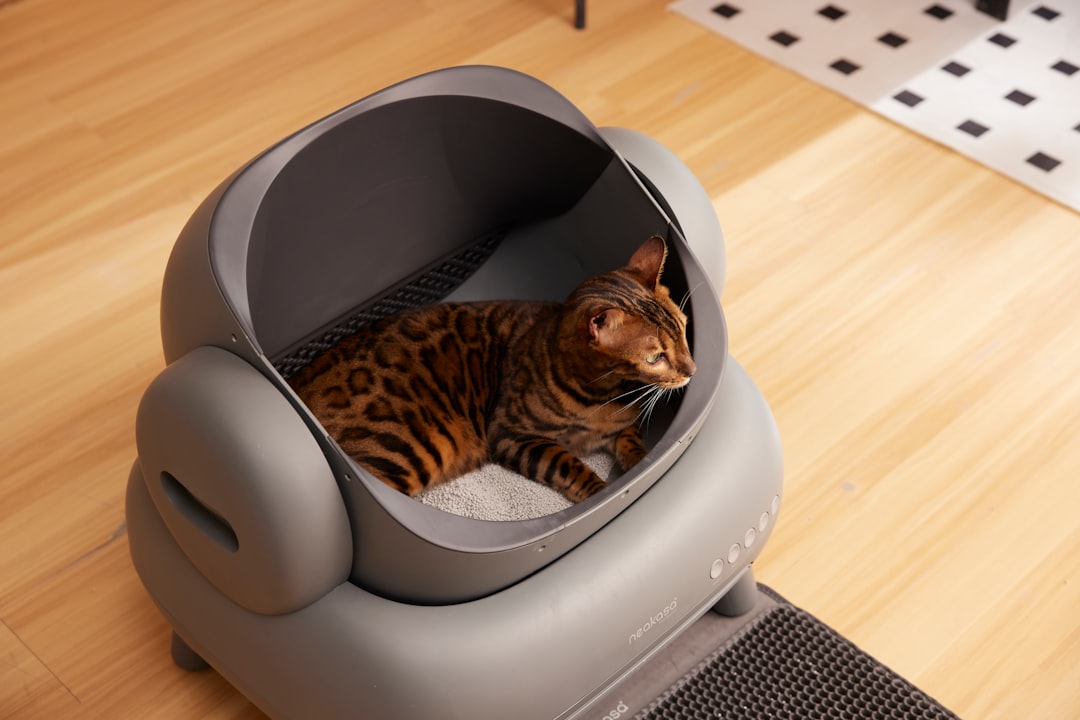
Odor control is the single most important feature in the automatic cat litter box category after the “automatic” claim itself. End customers who buy a USD 299 box expect their room to smell the same as it did before the box arrived. A box that fails on odor is a box that gets returned within 30 days regardless of how well its cleaning cycle runs. For a B2B buyer sourcing cat litter boxes from China, understanding the odor control technologies on the market is critical for picking the right models and positioning them correctly. Written from Hefei, China, by Eviehome (Hefei Ecologie Vie Home Technology Co., Ltd.).
Cat urine contains compounds (urea, creatinine, felinine) that break down into ammonia when they meet bacteria in the litter. Ammonia is volatile and diffuses through any opening. Cat feces adds hydrogen sulfide, methane and indoles to the mix. Traditional open litter trays rely entirely on the cat owner emptying them quickly enough to prevent bacterial breakdown, which is why a single-tray multi-cat household always smells. Automatic cat litter boxes have an advantage: the waste is sealed away into a separate drawer quickly after each use, cutting the ammonia generation time dramatically. But the sealing has to actually work.
The baseline technology. The waste drawer has a rubber gasket around its opening and contains a small carbon filter mounted in the lid. Air inside the drawer passes through the carbon when the drawer is opened, adsorbing volatile compounds. Effective for the first 30 to 60 days, after which the carbon saturates and needs replacement. Present on 90 percent of mid-range boxes.
Cost impact: USD 1 to USD 2 per unit for the filter + gasket. Low incremental cost.
A larger carbon filter plus a small negative ionizer inside the waste drawer. Ionization neutralizes airborne bacteria and reduces the bacterial activity that produces ammonia in the first place. More effective than passive carbon alone, lasts longer before replacement (60 to 90 days).
Cost impact: USD 3 to USD 5 per unit. Premium tier feature.
A short UV-C light cycle runs inside the drum after each cleaning. UV-C kills bacteria on the drum walls and reduces the bacterial load that produces ammonia when the next cat arrives. Requires a UV-safe enclosure so no UV exits the drum while the cat is inside (safety critical). Used in premium boxes.
Cost impact: USD 5 to USD 10 per unit. Premium feature.
A small reservoir of pet-safe deodorizer liquid is sprayed as a fine mist into the drum after each cleaning cycle. The mist coats the clean litter surface with a neutralizing agent that absorbs residual ammonia. Requires consumable refills (USD 8 to 15 per refill, lasting 2 to 4 months).
Cost impact: USD 4 to USD 8 per unit. Premium feature. Consumable subscription revenue pull-through for the brand.
A small fan draws air from the waste drawer through a multi-layer filter (carbon + HEPA) and exhausts it out of the back of the box. Active evacuation is significantly more effective than passive sealing. Rare in 2026 (found in only a few premium boxes) but growing.
Cost impact: USD 6 to USD 12 per unit. Luxury tier.
Odor control is not only a hardware problem. The litter inside the box matters as much as the hardware. Three litter-related factors:
A high-end box with cheap litter smells worse than a mid-range box with premium litter. Your marketing copy should address this: recommend compatible litters, explain the minimum depth.
During your sample testing phase, run this practical odor test on any cat litter box you are considering:
A good box produces essentially no odor detectable at normal standing distance. A mediocre box produces a faint smell within 2 to 3 meters of the box. A bad box fills the room after 24 hours.
“Odor-free” is a strong claim but hard to substantiate legally. More credible marketing copy:
Avoid vague claims like “100 percent odor elimination” or “zero smell” that invite FTC complaints if a customer can prove otherwise.
Passive carbon: every 30 to 60 days in single-cat households, every 2 to 4 weeks in multi-cat households. Multi-layer carbon with ionizer: 60 to 90 days single-cat, 4 to 6 weeks multi-cat. Train your customer support team to expect these replacement cycles.
Technically yes, but the product will fail on Amazon reviews within 60 days. Every box under USD 199 retail should have at least a sealed waste drawer with a passive carbon filter. Below that, you are setting yourself up for returns.
We offer passive carbon (standard on all 14 models), multi-layer carbon with ionizer (premium models), UV sterilization (2 models), automated deodorizer spray (1 model), and active evacuation on the luxury flagship. Contact us with your target tier and we recommend the right technology.
Eviehome manufactures 14 cat litter box models with progressive odor control technologies across entry to luxury tiers. Based in Hefei, China since 2014. See our definitive B2B buyer’s guide and our 2026 top features article.
Contact Ryan Lau at ryanlau@eviehometech.com, on WhatsApp at +86 199 5653 0913, or use the contact form.