Smart Vending Payments, Telemetry and Cybersecurity Checklist
Smart vending cybersecurity decisions should begin with the project owner's use case,…

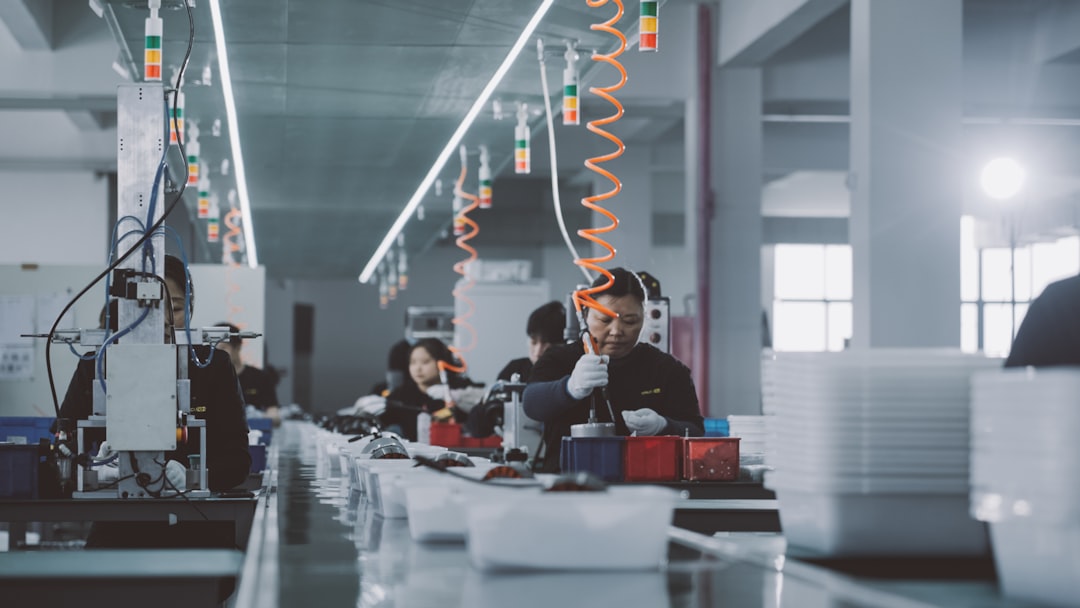
Every B2B buyer who sources smart pet products from China eventually asks the same question: where does the money actually go? Understanding the real cost structure behind a USD 85 FOB unit price is the difference between negotiating effectively and negotiating blindly. This article breaks down the typical cost structure of manufacturing a mid-range smart pet product in China in 2026, using an automatic cat litter box as a reference case, and explains what each line item covers and why. Written from inside the factory by Eviehome (Hefei Ecologie Vie Home Technology Co., Ltd.), based in Hefei, China.
We use a mid-range automatic self-cleaning cat litter box as the reference case because it is the highest-volume, highest-ASP smart pet product category in 2026. The specifications for our reference unit:
FOB Ningbo price for 500 units: USD 85 per unit. Here is where that USD 85 goes.
| Component category | Cost (USD) | % of total |
|---|---|---|
| Injection-moulded plastic parts (drum, housing, waste drawer, lid) | 16.00 | 18.8% |
| DC brushless motor + drive assembly | 12.00 | 14.1% |
| Sensor array (weight sensor, infrared sensor, limit switches) | 6.00 | 7.1% |
| Main PCB + WiFi module + microcontroller | 8.50 | 10.0% |
| Carbon filter + deodorizer cartridge | 1.50 | 1.8% |
| Power adapter (UL-listed, universal plug) | 4.00 | 4.7% |
| Wiring harness + connectors + screws | 2.50 | 2.9% |
| Assembly labor (0.45 hours at USD 11.11/hour) | 5.00 | 5.9% |
| Packaging (color box, foam, manual, accessories) | 9.00 | 10.6% |
| 100% function test + AQL 2.5 sampling | 3.00 | 3.5% |
| Certifications amortization (CE, FCC, ROHS, REACH) | 2.00 | 2.4% |
| Factory overhead (rent, utilities, engineering, management) | 6.00 | 7.1% |
| Factory margin (gross profit) | 9.50 | 11.2% |
| Total FOB Ningbo (per unit) | 85.00 | 100% |
The biggest single line item. A cat litter box has 15 to 25 distinct injection-moulded plastic parts: the drum (split into 2 to 4 pieces), the outer housing (typically 4 pieces), the waste drawer, the sensor mounting bracket, the base plate, the feet, the cable routing channels, and half a dozen small parts. Each part has its own mould. The tooling for the full product lives in the factory’s mould inventory and was amortized across thousands of units before your order.
The raw material is food-grade ABS plastic at about USD 2.50 to USD 3.00 per kg. A cat litter box weighs about 5 to 7 kg empty, of which 3 to 4 kg is plastic. Raw material cost per unit: USD 7 to USD 12. The rest is moulding labor, energy, mould amortization and factory margin on the moulding step.
The motor is the single most failure-prone component in a cat litter box. A quality brushless DC motor rated for 50 000+ cycles costs USD 8 to USD 14 depending on torque, speed and brand. Budget brands cost USD 4 to USD 6 but have significantly higher failure rates under real usage. The drive assembly includes the gearbox, the drive shaft, the bearings and the mounting hardware.
A modern cat litter box uses a combination of sensors for safety and automation: a weight sensor under the drum to detect cat presence, an infrared sensor at the entrance to catch re-entry mid-cycle, limit switches to know the drum position, and sometimes a temperature sensor for the waste drawer. Individually, each sensor is cheap (USD 0.80 to USD 2.50). Combined with the mounting hardware and calibration, the full sensor array lands around USD 6.
This is where Moore’s law has been most generous. Five years ago, a WiFi-enabled PCB with a microcontroller cost USD 15 to USD 20. In 2026 the same functionality is USD 7 to USD 10 thanks to the commoditization of ESP32, RTL8720 and similar WiFi SoCs. The PCB itself is a 2-layer FR4 board manufactured by one of the Chinese PCB fabs (JLCPCB, PCBWay, Allpcb and hundreds of others). Assembly via SMT (surface mount technology). Firmware is usually a customized version of Tuya or eWeLink for the mainstream segment, native firmware for the premium segment.
A UL-listed, CE-certified, multi-plug universal power adapter costs USD 3.50 to USD 5 per unit at 500 unit volume. Budget adapters (no UL, cheaper components) cost USD 1.50 to USD 2.50 but they are the single biggest cause of Amazon listing removals for pet products. Invest in the UL-listed adapter.
Hefei-based factories pay their assembly line workers around USD 8 to USD 12 per hour fully loaded (wage + social contributions + benefits). A cat litter box takes about 25 to 30 minutes of assembly labor per unit across 8 to 12 assembly stations. That is 0.45 hours per unit or about USD 5 in direct labor cost.
Contrary to a common myth, Chinese assembly labor is not free. It is 5 to 10 times cheaper than European or US labor for the same hour, but it is a real cost that eats 5 to 7 percent of the unit price on an electromechanical product.
A full retail-ready package for a cat litter box includes: the color box with printed artwork, the internal foam protection, the accessory bag (litter scoop, filter, manual, power cable), the warranty card and the Amazon-friendly inner box. Total packaging cost at 500 units: USD 8 to USD 10. Custom artwork adds USD 300 to USD 800 in design and film setup, amortized across the order.
Running a 100 percent function test on every finished unit takes about 5 minutes of QC labor per unit, plus the electricity and test equipment depreciation. AQL 2.5 sampling on the finished batch adds maybe 0.5 percent on top. Total QC cost: USD 2.50 to USD 3.50 per unit.
Full CE + FCC + ROHS + REACH testing for a new cat litter box model costs USD 6 000 to USD 12 000 in lab fees. Amortized across a 2-year production run of 5 000 to 20 000 units, that is USD 1 to USD 3 per unit.
Factory rent, utilities (the motors and PCBs draw real electricity), engineering team salaries, quality management, accounting, ERP software, sales team salaries. A typical Chinese electronics factory runs at 6 to 10 percent overhead cost on the direct product cost.
What the factory keeps as gross profit before its own corporate taxes. Chinese manufacturing factories target 10 to 15 percent gross margin on wholesale orders. Smaller orders (500 to 1 000 units) land closer to 15 percent because of the fixed setup overhead. Larger orders (5 000+ units) land closer to 8 to 10 percent because of volume efficiency.
Some Alibaba suppliers quote USD 55 or USD 50 FOB for a similar cat litter box. That is not a magic discount. It is either:
A USD 55 quote for a product that has a realistic cost floor of USD 70 is a warning, not a discount. Walk away.
No. The 11.2 percent is gross margin before Chinese corporate income tax (25 percent standard rate). The net factory margin after tax is closer to 8 percent, which is a thin business and explains why factories work hard to maintain volume and avoid bad customers.
At 5 000 units, the FOB price typically drops 8 to 12 percent because fixed setup costs (QC training, line changeovers, certification amortization, packaging setup) are spread over 10x more units. Expect USD 75 to USD 78 FOB at 5 000 units for the same specification.
Below the realistic 10 percent gross margin floor, no. The factory cannot sustain its business on less. A buyer who squeezes the margin to 5 percent gets 2 or 3 good orders and then the factory de-prioritizes them for other customers. Respect the margin; negotiate on volume and lead time instead.
Eviehome runs 2 production lines in Hefei, China, manufacturing 14 cat litter box models across multiple price tiers. We provide transparent cost discussions with serious B2B buyers during the RFQ phase. See our OEM and ODM services page and our definitive B2B buyer’s guide for automatic cat litter boxes.
Contact Ryan Lau at ryanlau@eviehometech.com, on WhatsApp at +86 199 5653 0913, or use the contact form.