Smart Vending Payments, Telemetry and Cybersecurity Checklist
Smart vending cybersecurity decisions should begin with the project owner's use case,…

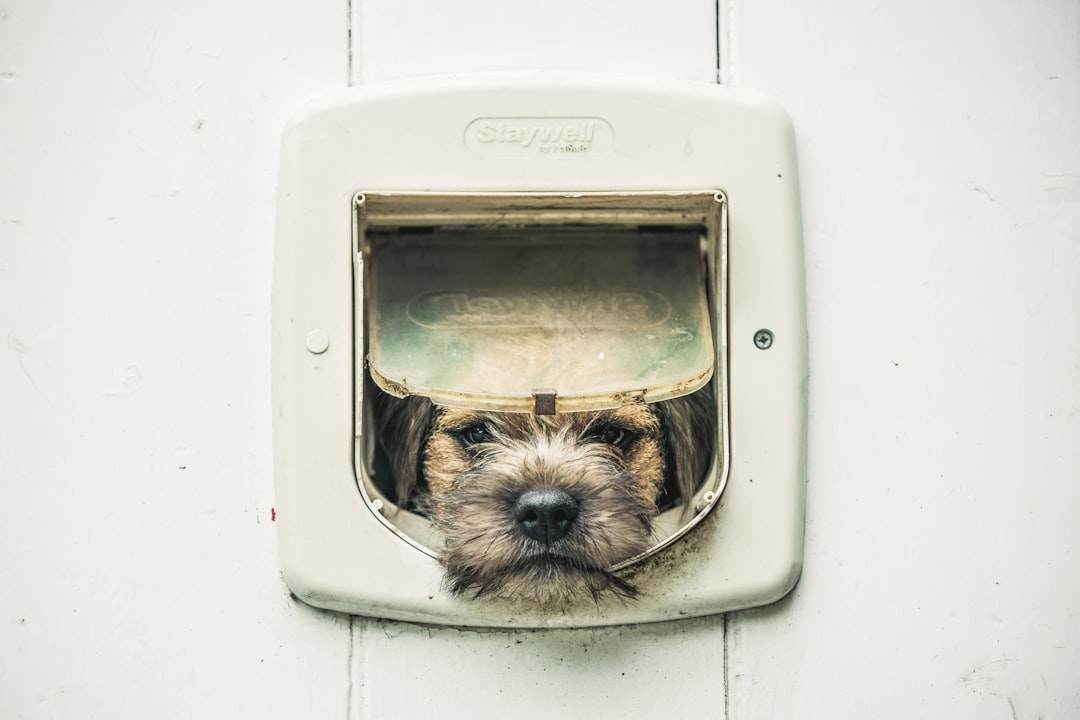
Smart pet doors are a USD 400 million global category growing at 17 percent per year, driven by the shift from simple flap doors to selective access doors that recognize a specific pet and deny entry to strangers (stray cats, raccoons, other dogs). The market leader SureFlap dominates the microchip segment in Europe, while US buyers are split between microchip, RFID collar tag, and newer app-controlled models. For a B2B buyer, the category is attractive because the unit prices are high (USD 149 to 499 retail), the margins are strong, and the buyer motivation (keeping strays out) is emotionally compelling. Written from Hefei, China, by Eviehome (Hefei Ecologie Vie Home Technology Co., Ltd.).
The pet door reads the pet’s existing microchip (the one implanted by the vet for identification) via RFID. Only registered chip IDs can open the door. No collar or tag needed.
Pros: pet does not need to wear any accessory, universal (every cat or dog with a microchip works), privacy-friendly (chip data stays local).
Cons: read range is short (requires the pet to pass close to the sensor), compatible only with standard 15-digit FDX-B microchips (the global standard), slower unlock time than collar tags.
Best for: European market where microchipping is mandatory and universal.
The pet wears a small RFID tag on their collar. The door reads the tag and unlocks. The tag is brand-proprietary.
Pros: longer read range than microchip, faster unlock, can personalize per pet (multiple tags registered to one door), no microchip needed.
Cons: pet must wear the tag (some cats lose collars), battery-powered tags need replacement, proprietary tags mean lock-in to the brand.
Best for: US market where microchipping is less universal and collar-wearing is common.
The door connects to WiFi and is controlled via mobile app. The owner manually opens the door remotely, or sets schedules (“open between 7am and 9pm”), or links it to the pet’s GPS tracker or smart collar for automatic opening.
Pros: most flexible, integrates with smart home, detailed access logs, remote control.
Cons: requires WiFi connectivity, harder to pair, not as automatic as microchip or RFID for frequent exits/entries.
Best for: premium tech-forward buyers who want full smart home integration.
| Tier | Retail | Technology |
|---|---|---|
| Entry | USD 89 to 149 | Manual flap, no electronics |
| Mid-range | USD 149 to 249 | RFID collar tag, local control |
| Smart RFID | USD 199 to 299 | Microchip or RFID + app logging |
| Premium app-controlled | USD 299 to 499 | WiFi + microchip or RFID + scheduling + smart home integration |
Smart pet doors are more complex to install than flap doors because they include electronics, batteries or wiring, and typically a larger frame. Installation constraints:
Smart pet door buyers are usually in one of these segments:
The competitive pressure on established brands is opening space for new brands with modern tech (WiFi, app, integration) at mid-range pricing.
Fewer factories produce smart pet doors than produce pet feeders, because the combination of hardware, electronics, weatherproofing and frame engineering is more specialized. Around 8 to 12 credible Chinese factories.
FOB costs:
MOQ 500 to 1000 units. Tooling and certification can be significant (USD 15 000 to 40 000 NRE for a custom design). Most new brands start with an existing factory design and customize the branding only.
Yes, reliably. A well-engineered selective access door unlocks only for registered pets. Intruders approaching the door find it mechanically locked. The main failure mode is a determined raccoon forcing the flap, which is mitigated by magnetic or mechanical locking.
5 to 8 years with normal use. The weak points are the motor (opens and closes thousands of times per year), the RFID reader coil, and the weather seals. Quality factories build to 50 000+ open/close cycles.
We do not currently manufacture smart pet doors. We focus on cat litter boxes, pet feeders and water fountains. For smart pet doors, Ryan Lau can refer you to trusted factory partners.
Eviehome specializes in automatic cat litter boxes, pet feeders and water fountains. We partner with trusted Chinese pet door factories for referrals. Based in Hefei, China since 2014. See our smart pet market overview 2026.
Contact Ryan Lau at ryanlau@eviehometech.com, on WhatsApp at +86 199 5653 0913, or use the contact form.