Smart Vending Payments, Telemetry and Cybersecurity Checklist
Smart vending cybersecurity decisions should begin with the project owner's use case,…

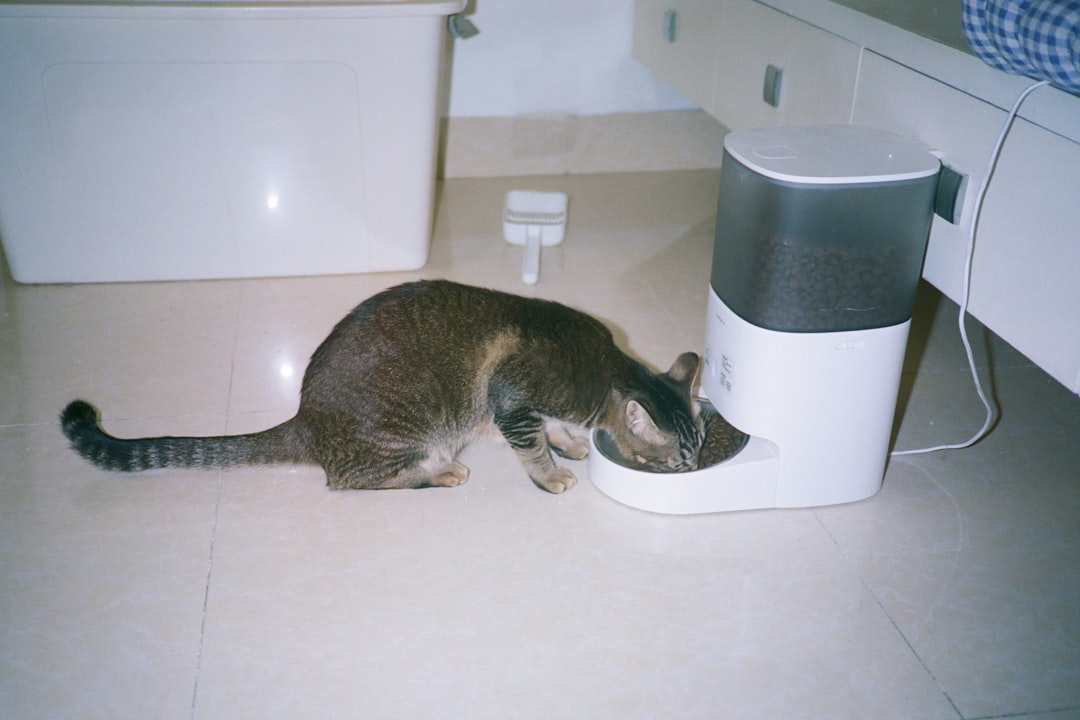
Automatic pet feeders look similar from the outside (a hopper on top, a bowl on the bottom, a motor that dispenses kibble on schedule) but cat feeders and dog feeders are surprisingly different products under the hood. Stocking the wrong model for the wrong species leads to customer complaints, returns, and bad Amazon reviews. For a retailer or distributor sourcing from China, understanding these differences is how you avoid the USD 30 000 first-order mistake of ordering the wrong SKU. This article explains the 8 key differences between automatic cat feeders and automatic dog feeders, written from Hefei, China, by Eviehome (Hefei Ecologie Vie Home Technology Co., Ltd.).
Cat feeders: 3 to 5 liters is standard. A single cat eats 40 to 80 grams of dry food per day, so a 4 liter hopper holds 7 to 12 days of food. Larger hoppers are overkill for single-cat households and waste counter space.
Dog feeders: 6 to 15 liters depending on breed size. A medium dog (15 to 25 kg) eats 200 to 350 grams per day. A 10 liter hopper holds 10 to 15 days of food. Large breeds need 12+ liter hoppers.
Cat feeders: 5 to 50 grams per meal, adjustable in 5-gram increments. Cats graze, so multiple small meals (4 to 8 per day) is normal. Precision at low portion sizes matters (a 10-gram error on a 30-gram meal is a 33 percent overfeeding risk).
Dog feeders: 20 to 250 grams per meal. Dogs typically eat 2 to 4 larger meals per day. Precision matters less at large portion sizes (a 10-gram error on a 200-gram meal is 5 percent).
Cat feeders: small auger screws designed for uniform small kibble (3 to 8 mm grain). Low torque motor, quiet operation.
Dog feeders: larger auger or impeller designed for variable kibble size (5 to 15 mm grain, sometimes up to 20 mm for large breed food). Higher torque motor to handle the larger grain volume.
Using a cat feeder with dog kibble jams the auger within days. Using a dog feeder with cat kibble overshoots the portion. Match the hardware to the species.
Cat feeders: small stainless steel or ceramic bowl, typically 200 to 300 ml. Elevated slightly for comfort but not critical.
Dog feeders: larger bowl, 500 ml to 1 500 ml depending on breed. Weighted base or bottom-heavy design to prevent the dog from tipping the feeder. Large dogs can push a light feeder across the floor, so weight matters.
Cat feeders: lightweight ABS plastic housing. Cats do not chew the feeder.
Dog feeders: reinforced plastic or metal reinforcements. Dogs, especially puppies, chew on everything within reach. The power cord needs to be protected or concealed. The hopper lid needs a lock that the dog cannot open.
Cat feeders: usually absent. Cats do not respond to recorded voice commands in a meaningful way.
Dog feeders: common premium feature. The owner records a short voice message (“come eat, buddy”) that plays when the feeder dispenses food. Dogs associate the recording with the feeding routine. Adds USD 2 to USD 4 per unit in cost.
Cat feeders: cameras are common on premium models. Owners want to see their cat during the day. Usually top-down camera view of the bowl area.
Dog feeders: cameras less common but growing. Owners care more about interactive two-way audio (talk to the dog) than visual monitoring. Two-way audio is the differentiating feature on premium dog feeders.
Cat feeders: marketed to cat-parent millennials who want smart home automation and cat health tracking.
Dog feeders: marketed more utilitarian. “Feed your dog on time even when you are at work”. Different emotional angle, different creative direction for marketing content.
Yes, there are “universal” automatic feeders that handle both cats and small-to-medium dogs. They have a mid-size hopper (6 to 8 liters), variable portion size (10 to 150 grams), a quiet universal auger and a mid-size bowl. They are marketed as “multi-pet” or “cat and small dog”.
Trade-offs: universal feeders are larger than cat-only feeders (takes more counter space) and smaller than dog-only feeders (not suitable for large breeds). The sweet spot is single-household with one cat and one small dog.
For a retailer, stocking a universal feeder as one SKU simplifies inventory. Stocking species-specific feeders as separate SKUs maximizes per-species conversion but requires more shelf space.
For a pet specialty store entering the automatic feeder category, we recommend:
This covers both species across 2 price points each. Total inventory: 20 to 40 units across 4 SKUs, roughly USD 3 000 to USD 6 000 of wholesale investment.
Yes. We manufacture 3 active automatic dog feeder models (including large-breed capacity) and several cat feeder models in our Automatic Cat Fountain product line category. Contact Ryan Lau to get the full list.
Identical. 500 units per SKU for standard wholesale with cosmetic customization. Higher volume tiers available at 1 000 and 5 000 units.
Only for universal “multi-pet” feeders. Species-specific models should be marketed as what they are. Mis-positioning a cat feeder as a dog feeder (or vice versa) generates bad reviews.
Eviehome manufactures both species-specific and universal automatic pet feeders. Based in Hefei, China since 2014. See our smart pet feeders wholesale buyer’s guide.
Contact Ryan Lau at ryanlau@eviehometech.com, on WhatsApp at +86 199 5653 0913, or use the contact form.