Smart Vending Payments, Telemetry and Cybersecurity Checklist
Smart vending cybersecurity decisions should begin with the project owner's use case,…

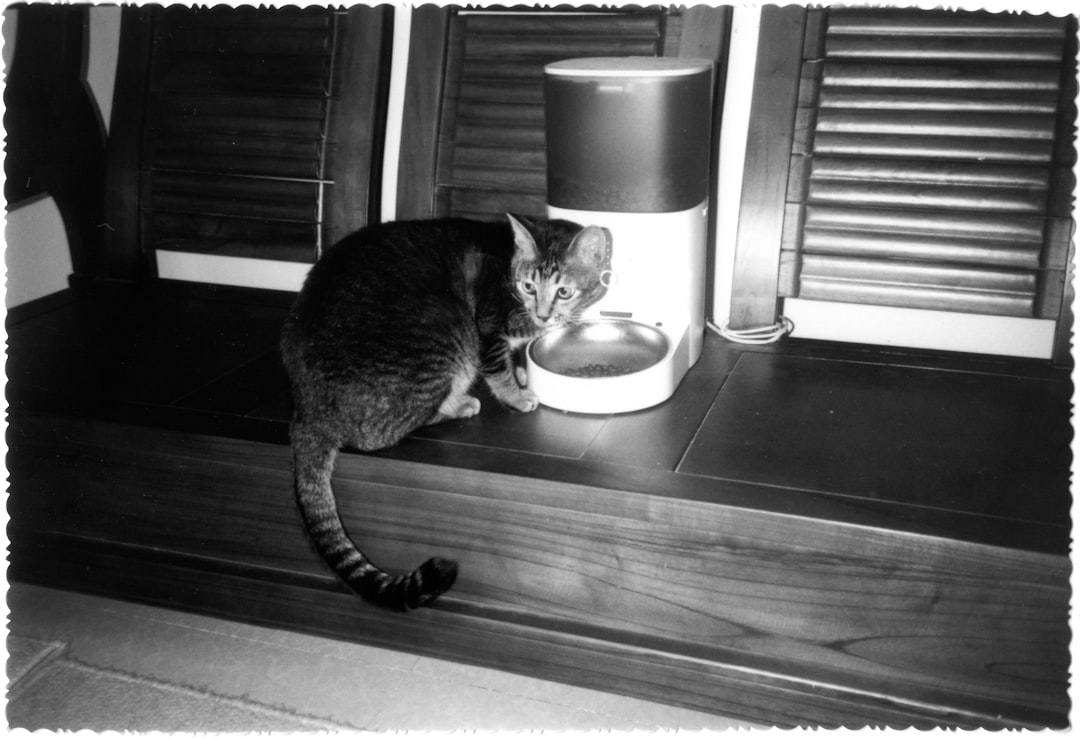
Power source is one of the most overlooked specifications in automatic pet feeders, but it directly drives warranty returns, customer complaints and real-world reliability. A pet feeder that stops dispensing during a 6-hour power outage is a feeder that gets a 1-star review because the cat missed a meal. A feeder that burns through D-cell batteries in 3 weeks is a feeder that gets returned for being “always dead”. For a B2B buyer, the power design is where cheap feeders diverge from reliable ones. This article explains the 4 power architectures in the market and which to stock, written from Hefei, China, by Eviehome (Hefei Ecologie Vie Home Technology Co., Ltd.).
A USB-C or DC barrel connector powers the feeder from a wall outlet. No battery, no backup. The feeder works only as long as the wall power is on.
Pros: simplest design, lowest unit cost (USD 1 to 2 saved vs dual power), smallest footprint, reliable as long as the outlet is live.
Cons: catastrophic failure during power outages. A 6-hour outage means a missed meal, which means a 1-star review. Not acceptable for reliability-focused premium segment.
Best for: entry-level feeders at USD 39 to 69 retail where the buyer accepts the trade-off.
4 D-cell alkaline batteries power the feeder for 4 to 6 months of typical use. No wall power. The feeder is fully portable and location-independent.
Pros: no wires, can be placed anywhere in the house, works during power outages by default, simple wiring.
Cons: battery replacement is annoying for buyers (the feeder dies silently if the batteries run low between checks), alkaline batteries are bad for the environment, the owner pays USD 15 to 25 per year in battery replacements.
Best for: tech-averse buyers, off-grid households, users who cannot place a feeder near an outlet. Still sold on Amazon but declining.
AC adapter powers the feeder in normal operation. 4 D-cell batteries (or an internal lithium backup) take over if wall power is lost. The feeder seamlessly continues feeding during outages.
Pros: handles every common failure mode (outlet unplugged by pet, power outage, tripped breaker). The single biggest reliability feature you can add to a pet feeder. Adds USD 2 to 4 per unit.
Cons: larger footprint (batteries take space), heavier shipping weight, slightly more complex wiring.
Best for: all mid-range and premium feeders above USD 79 retail. This should be the default design for any feeder targeting reliability-conscious buyers.
An internal 2000 to 4000 mAh lithium-ion battery is charged by a USB-C cable. The feeder runs on wall power when plugged in and on the lithium battery when unplugged. Lasts 2 to 4 weeks unplugged.
Pros: elegant, modern, no battery replacements, always-ready backup, fits the USB-C ecosystem.
Cons: USD 4 to 8 extra unit cost for the lithium cell + charging circuit, transportation restrictions (lithium batteries are UN3481 regulated, affects air freight), cell degradation after 2 to 3 years requires service.
Best for: premium feeders at USD 149+, brands that want the modern positioning (“no batteries, no wires needed during outages”).
| Architecture | Added cost | Reliability | Buyer satisfaction |
|---|---|---|---|
| Plug-in only | Baseline | Low | Low |
| Battery only | +USD 1 | Medium | Medium |
| Dual (plug + D-cell) | +USD 2 to 4 | High | High |
| Dual (plug + lithium) | +USD 4 to 8 | High | Very high |
We tested 20 pet feeders across all 4 architectures in 2024 for reliability under simulated 6-hour power outages. Results:
The lesson: dual power is reliable as long as the battery compartment contacts are quality. This is an easy factory QC check.
Lithium-ion batteries are classified as UN3481 dangerous goods when shipped separately, and UN3481 PI966 when shipped contained inside equipment. In practice this means:
D-cell alkaline batteries have no such restrictions. For this reason, dual plug + D-cell is often simpler for a first-time importer than dual plug + lithium.
For a pet specialty retailer entering the pet feeder category:
If the wall power never fails, the batteries last 6 to 12 months (just powering the low-power standby circuit). If wall power fails for 4 hours once a month, the batteries last 4 to 6 months. Replace annually as a maintenance habit.
Technically yes, but Ni-MH batteries have lower voltage (1.2V vs 1.5V for alkaline) which can cause the feeder to report “low battery” prematurely. Most feeder manuals recommend alkaline. Ask the factory what the feeder’s low-battery threshold is.
Yes, all our mid-range and premium feeders use dual power (AC adapter + D-cell or internal lithium backup). Our budget tier is plug-in only. Contact Ryan Lau for architecture recommendations by SKU.
Eviehome manufactures pet feeders with all 4 power architectures, with dual-power being the default on mid-range and premium tiers. Based in Hefei, China since 2014. See our WiFi pet feeders 2026 features article.
Contact Ryan Lau at ryanlau@eviehometech.com, on WhatsApp at +86 199 5653 0913, or use the contact form.