Smart Vending Payments, Telemetry and Cybersecurity Checklist
Smart vending cybersecurity decisions should begin with the project owner's use case,…

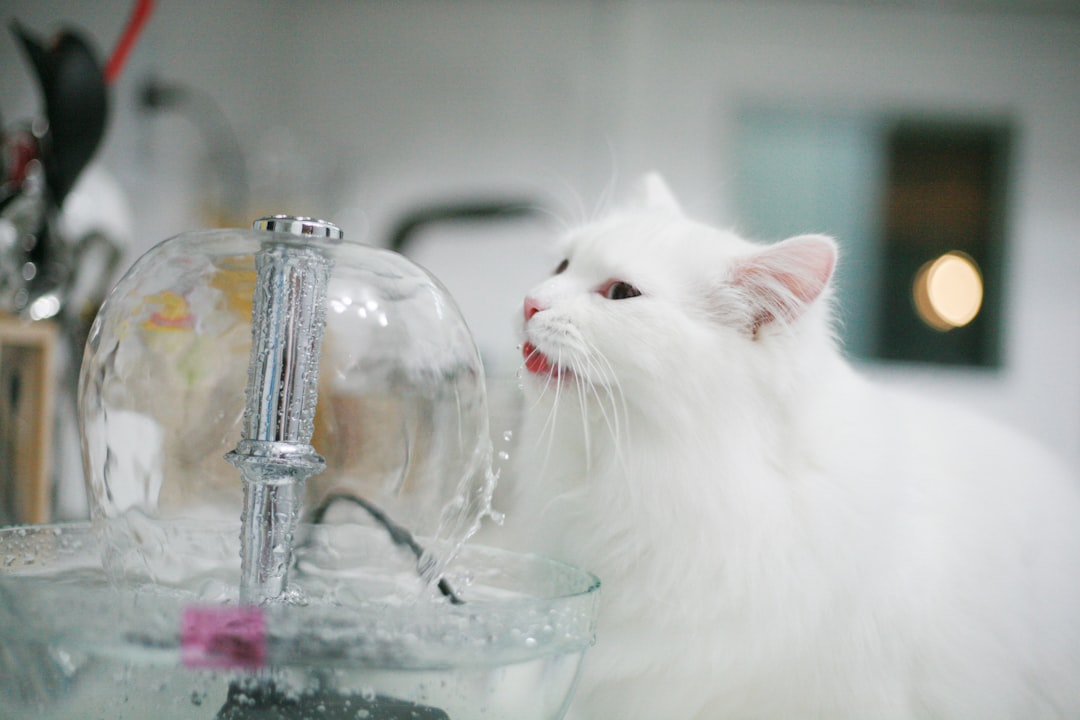
Cat water fountains sell on a simple marketing claim: “cats drink more from running water”. The claim is backed by veterinary research and field studies, but the mechanism is more interesting than marketing copy suggests. Understanding the science behind fountain water quality is how you help a retailer sell the category on health value, not just aesthetics. This article covers the biology, the water chemistry, and the bacterial load arguments that actually move the buying decision. Written from Hefei, China, by Eviehome (Hefei Ecologie Vie Home Technology Co., Ltd.).
Domestic cats descend from Felis silvestris lybica, the African wildcat of arid regions. Their ancestors evolved to get most of their water from prey (a fresh-killed rodent is 70 percent water) and to tolerate mild chronic dehydration without complaint. Modern house cats inherited this biology unchanged.
Commercial dry kibble contains 6 to 10 percent water by weight. A cat on a kibble-only diet therefore needs to drink much more water than a cat on wet food or raw prey to hit the 50 to 80 ml per kilogram daily water target. But the inherited low thirst drive means most kibble-fed cats under-drink, leading to chronic low-grade dehydration.
The clinical consequence of chronic dehydration is concentrated urine and stressed kidneys. Over years, this contributes to chronic kidney disease (CKD), which affects 30 to 40 percent of cats over 10 years old and is the #1 cause of death in senior cats.
Veterinary research (Robertson 2008, Grant 2010, Pachel & Neilson 2010) documents three distinct mechanisms behind the flowing-water preference:
Cats are predators hardwired to detect motion. Moving water activates the same neural pathways as moving prey, drawing the cat to investigate and drink. Still water in a bowl has no motion signature and fails to attract attention.
Cats can detect minute temperature differences. Water that is circulating through a fountain is cooler than stagnant bowl water (evaporative cooling + heat exchange with the room) and cats associate cool water with freshness. Stagnant water warmed by the environment is correctly perceived as “stale”.
The soft sound of flowing water is both attractive and informative to cats. They hear the sound and know water is nearby, which encourages approach. Silent still-water bowls provide no auditory cue.
Published studies measuring cat water intake from fountains vs bowls find consistent increases:
The effect is strongest when the cat is switched from a dirty or distant bowl to a clean fountain. It is weakest when the cat already drinks adequately from a bowl (some cats are outliers who love water).
Water that sits still in a bowl accumulates bacteria from the cat’s mouth (dental bacteria), from dust, from room air, and from the bowl surface. Measured colony counts in a typical uncleaned bowl after 24 hours: 10^5 to 10^7 CFU/ml.
A fountain with a carbon filter and continuous circulation has measurably lower bacterial counts: 10^3 to 10^5 CFU/ml after 24 hours, and 10^2 to 10^4 with a UV-C sterilizer. The reduction is due to:
Lower bacterial load means less risk of urinary tract infections, less dental plaque growth, and better taste (bacteria produce off-flavor metabolites). All three are marketable to cat owners.
Tap water contains chlorine, chloramines, and dissolved minerals that affect taste. Cats can taste chlorine at concentrations that humans cannot (around 0.2 ppm for cats vs 1 ppm for humans). A carbon-filter fountain removes 85 to 95 percent of chlorine, making the water more palatable to the cat.
In hard water regions (most of Europe and the US Midwest), ion exchange resin in the filter reduces calcium and magnesium, which further improves taste and reduces scale buildup on the pump impeller. The cat drinks more, and the fountain lasts longer.
Not all fountains deliver the full effect. The design matters:
The strongest marketing angles for cat water fountains in 2026:
Avoid vague marketing (“cats love it”) in favor of specific, researched claims. The specific claims convert better and survive buyer scrutiny.
Most do, but 10 to 15 percent of cats ignore the fountain initially. The factory-reset strategy: remove the regular bowl for 48 hours so the fountain is the only water source. The cat adapts within 2 to 4 days. Very few cats (maybe 2 to 3 percent) permanently refuse the fountain.
Full disassembly and cleaning: every 1 to 2 weeks. The filter handles bacteria and chemistry but the fountain surfaces still collect biofilm. A weekly rinse with hot water and mild soap is the minimum maintenance.
Yes. We provide chlorine removal rates, bacterial load reduction data, and pump noise measurements in our technical data sheets. See our certifications and quality page.
Eviehome manufactures cat water fountains based on veterinary research and water chemistry optimization. Based in Hefei, China since 2014. See our cat water fountain retail guide and our fountain filters sourcing article.
Contact Ryan Lau at ryanlau@eviehometech.com, on WhatsApp at +86 199 5653 0913, or use the contact form.