Smart Vending Payments, Telemetry and Cybersecurity Checklist
Smart vending cybersecurity decisions should begin with the project owner's use case,…

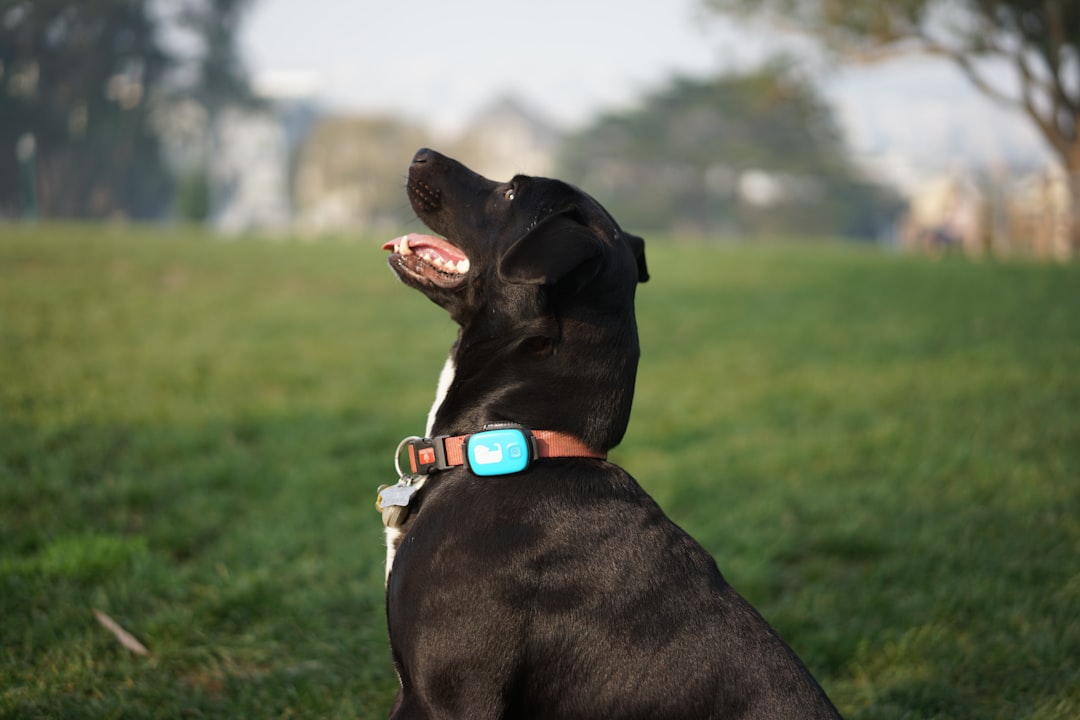
GPS pet trackers are the most mature of the smart pet accessories categories. The technology is proven, the supply chain is deep, and the global market hit USD 900 million in 2024 with 20 percent year-over-year growth. For a B2B buyer, the GPS tracker category is attractive because the product is small (low shipping cost), the margins are healthy (50 to 60 percent at retail), and the recurring revenue opportunity (SIM/cloud subscriptions) is strong. This article covers the tech, the pricing, the subscription economics and the sourcing reality for GPS pet trackers in 2026, written from Hefei, China, by Eviehome (Hefei Ecologie Vie Home Technology Co., Ltd.).
A GPS pet tracker is a small device attached to a pet’s collar that periodically reports its location to a cloud service, which the owner sees in a mobile app. The core components:
Some trackers add Bluetooth (for short-range “home zone” detection to save battery), Wi-Fi positioning (as a fallback indoors), and accelerometers (for activity tracking).
Still sold in 2026 at USD 29 to 49 retail. Use 2G cellular networks which are being shut down in most Western countries (US: Verizon 2022, AT&T 2022. EU: country by country through 2025 to 2028). 2G trackers work only where 2G is still live, making them a shrinking segment. Avoid stocking these for Western markets.
USD 69 to 129 retail. Use low-power 4G variants designed for IoT devices: LTE-M (better coverage, slightly higher power) or NB-IoT (lower power, better for stationary reporting). Most 2026 trackers use LTE-M for pet use cases because pets move and need frequent updates. Battery life 5 to 10 days with 10-minute update interval.
USD 129 to 199 retail. Combines GPS outdoors, Bluetooth short-range when the pet is near the home base station, and Wi-Fi fingerprinting when the pet is near known Wi-Fi networks. Extends battery to 14+ days by using the lowest-power positioning method available at any time. Premium brands like Tractive, Fi, and Whistle use this approach.
GPS pet trackers sell for USD 69 to 199 at retail but the real business model is the recurring subscription. The tracker needs a SIM card and cellular data, which cost the brand roughly USD 1 to 3 per month. The brand charges the customer USD 4 to 10 per month for the subscription, yielding USD 3 to 7 monthly gross margin per active subscriber.
Typical subscription economics for a new GPS tracker brand:
This is the most attractive recurring revenue model in the smart pet category. A 10 000 unit annual sales business generates USD 600 000 to USD 1.4M in subscription revenue alone.
Most GPS tracker brands do not buy cellular data directly from carriers. Instead they partner with an MVNO (mobile virtual network operator) that aggregates IoT SIM plans across multiple carriers in multiple countries. Popular options:
For a brand below 10 000 active devices, use an MVNO. For 50 000+, consider carrier direct.
GPS trackers contain cellular radios, which trigger regulatory requirements:
For a first launch, target the US and the EU only. Skip Japan and Korea until year 2 or 3.
GPS pet tracker category is dominated by a few brands in the US and EU:
For a new private-label brand, the opportunity is in the USD 69 to 99 mid-range segment where the established brands are less aggressive, with a fair subscription price of USD 5 to 7 per month.
There are 15 to 20 credible Chinese factories producing GPS pet trackers in 2026. MOQ is typically 500 to 1000 units. FOB unit cost: USD 18 to 32 for a standard 4G LTE-M tracker, USD 28 to 45 for a hybrid GPS+BT+Wi-Fi tracker. Tooling and certification fees are usually included in the setup cost for existing designs.
Custom features (larger battery, alternate colors, custom collar clip) add USD 1 to 5 per unit. Full custom mold is USD 15 000 to 30 000 NRE plus 4 to 8 weeks tooling time.
GPS accuracy drops under tree cover (10 to 30 meter errors) and in urban canyons (same or worse). Hybrid trackers (GPS + Wi-Fi + Bluetooth) compensate by using Wi-Fi fingerprinting when GPS is weak. Pure-GPS trackers are less useful in cities.
Yes, but cat-specific trackers need to be smaller and lighter (under 25 grams) because cats will not tolerate bulky collars. Some brands (Weenect, Tractive Cat Mini) make dedicated cat models.
We do not currently manufacture GPS trackers. We focus on automatic cat litter boxes, smart pet feeders, and cat water fountains. For GPS trackers, we can refer you to trusted factory partners in Shenzhen through Ryan Lau.
Eviehome specializes in automatic cat litter boxes, smart pet feeders and cat water fountains. We partner with trusted Chinese GPS tracker factories for referral and integration projects. Based in Hefei, China since 2014. See our smart pet market overview 2026.
Contact Ryan Lau at ryanlau@eviehometech.com, on WhatsApp at +86 199 5653 0913, or use the contact form.