Smart Vending Payments, Telemetry and Cybersecurity Checklist
Smart vending cybersecurity decisions should begin with the project owner's use case,…

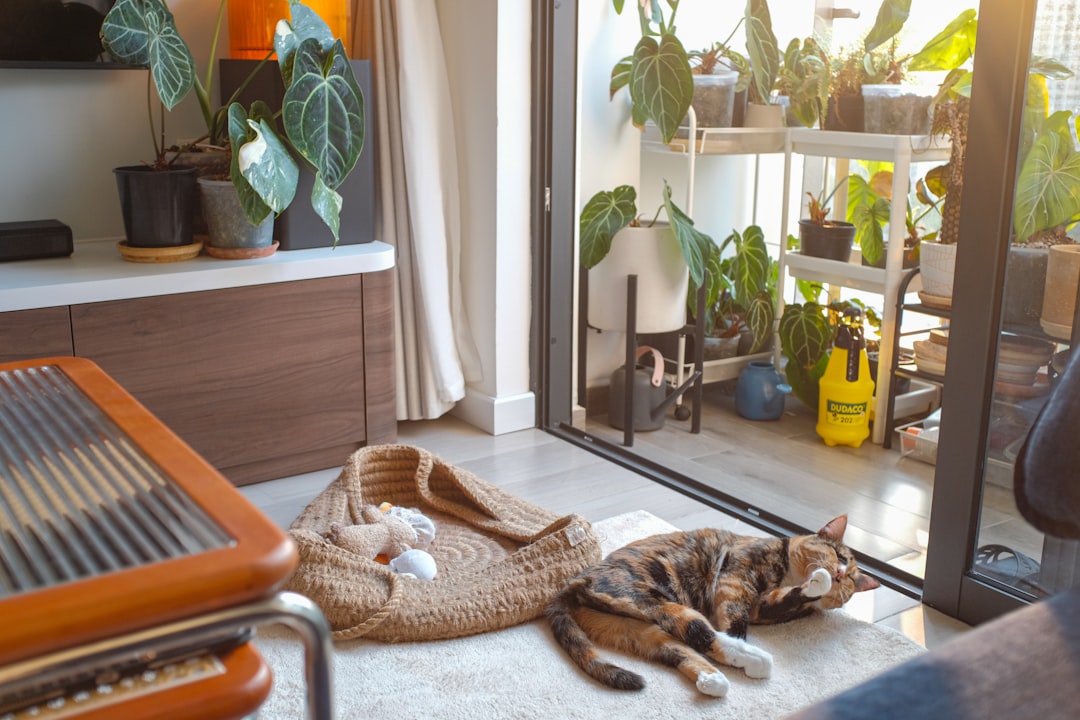
A pet household has measurably different indoor air quality than a non-pet household: 40 to 70 percent higher PM2.5 particulates, elevated VOCs, allergen dust, and urinary ammonia near litter boxes. A generic air purifier handles some of this but not optimally. A pet-specific purifier is tuned for the specific air quality challenges of living with pets. The difference is meaningful but not always obvious on the marketing copy. This article explains what actually separates a pet air purifier from a regular one. Written from Hefei, China, by Eviehome (Hefei Ecologie Vie Home Technology Co., Ltd.).
A pet air purifier has a coarse pre-filter designed specifically to catch pet hair before it reaches the HEPA filter. A generic purifier has a finer pre-filter that clogs quickly with pet hair, reducing airflow and shortening HEPA life.
The pet pre-filter is typically a removable washable mesh with larger openings. Pet owners can rinse it weekly and reuse it for years.
Cost difference: USD 3 to 8 more in manufacturing. Generic pre-filters are cheaper but perform worse with pets.
Pet odors (urinary ammonia, fecal VOCs, damp fur smell) require more activated carbon than household odors (cooking, smoke, cleaning chemicals). A pet purifier has 2 to 4 times more carbon per unit of airflow compared to a generic purifier.
The carbon layer is either a thicker activated carbon sheet or a separate carbon tray with granular carbon.
Cost difference: USD 8 to 20 more in manufacturing. This is the single biggest hardware difference.
Pet dander particles are often 2 to 5 microns, within the range that HEPA H13 (99.97 percent efficient at 0.3 microns) catches better than lower grades. A generic purifier may use HEPA H11 (95 percent at 0.3 microns) to save cost.
Pet-specific purifiers should always use H13 or higher. Verify the HEPA grade on the spec sheet.
Cost difference: USD 5 to 12 more per unit.
CADR (Clean Air Delivery Rate) is measured in 3 standard pollutant categories by AHAM: smoke, dust, pollen. Pet-specific purifiers add a 4th: pet dander. Good pet purifiers display the CADR dander rating separately.
For a bedroom-sized room (20 to 30 m2), target CADR pet dander above 150 m3/h. For a living room, above 250 m3/h.
Generic purifiers that do not list dander CADR may still work but are not optimized.
Pets are more sound-sensitive than humans, especially cats. A pet purifier operates at lower decibels, especially in its lowest fan setting.
This requires better fan bearings, larger quieter fan blades, and lower-resistance filters. Premium pet purifiers achieve 22 dB which is below the ambient noise of most rooms.
Some purifiers include an ionizer to help particles clump and settle. For pet households, ionizers are NOT recommended because:
Look for purifiers without ionizers or with the option to disable them.
An air purifier’s CADR should match the room size. A small purifier cannot clean a large room regardless of marketing claims.
| Room size | Target CADR (m3/h) |
|---|---|
| Small bedroom (15 to 20 m2) | 120 to 180 |
| Medium bedroom (20 to 30 m2) | 180 to 300 |
| Living room (30 to 50 m2) | 300 to 500 |
| Open living + kitchen (50+ m2) | 500+ |
For pet dander specifically, aim for the higher end of the range.
Pet households replace filters 30 to 50 percent more often than non-pet households due to higher particulate load:
Factor replacement filter cost into the ongoing ownership cost. USD 30 to 80 per replacement cycle is typical.
Basic HEPA + carbon, manual controls, small room coverage. Acceptable for a single bedroom. Often lacks the larger carbon layer that pet-specific models have.
HEPA H13, larger carbon layer, PM2.5 sensor, auto mode, decent room coverage. Good choice for most pet households.
Large room coverage, smart WiFi app, quiet operation under 25 dB, replaceable filter subscription, advanced pet dander optimization.
Yes, but it will not perform as well as a pet-specific purifier. If you already have a generic purifier, upgrade the filters to H13 and replace more often. For new purchases, pet-specific is worth the small premium.
They reduce exposure significantly but do not eliminate allergies entirely. Combined with regular cleaning, washing pet bedding, and vacuuming with a HEPA vacuum, a pet air purifier can reduce symptoms by 40 to 70 percent.
We are evaluating this category for 2026 to 2027 but do not currently manufacture them. Ryan Lau can refer you to trusted factory partners in Guangdong.
Eviehome monitors the pet air purifier category and can refer B2B partners to trusted factories. Based in Hefei, China since 2014. See our pet air purifiers emerging category article.
Contact Ryan Lau at ryanlau@eviehometech.com, on WhatsApp at +86 199 5653 0913, or use the contact form.