Smart Vending Payments, Telemetry and Cybersecurity Checklist
Smart vending cybersecurity decisions should begin with the project owner's use case,…

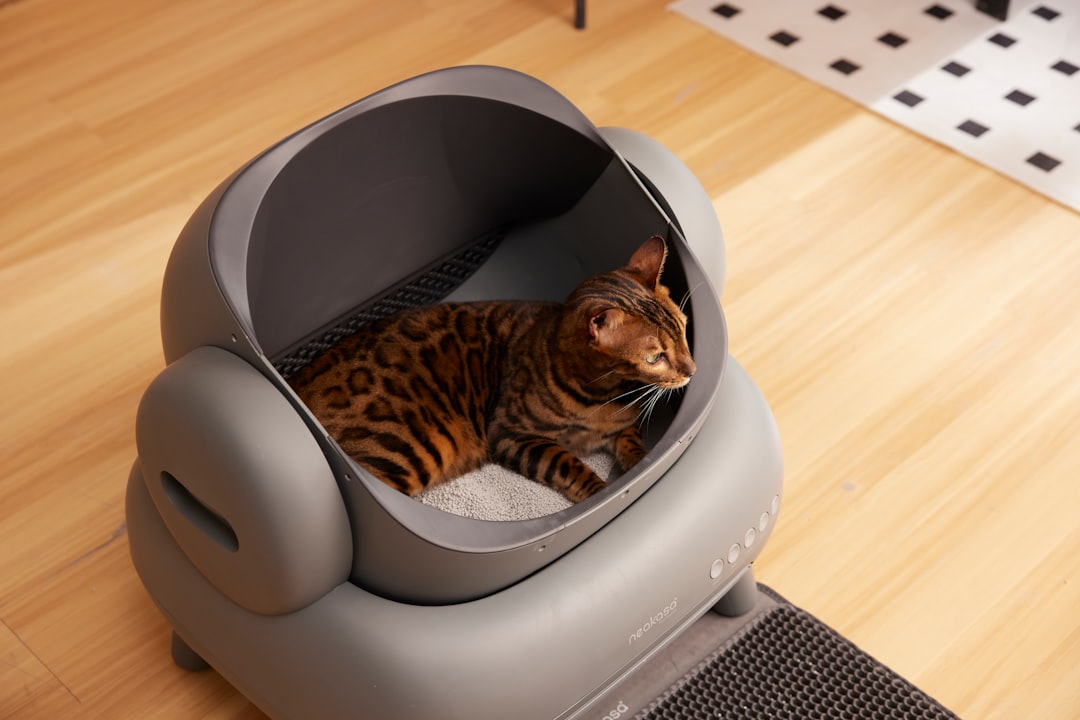
Automatic cat litter boxes are household appliances that contain live electronics, a high-torque motor and a rotating drum where a live animal enters and exits. They fall under the same electrical safety regulations as blenders, dishwashers and robot vacuums in every serious market. For a retailer or distributor stocking these products, understanding the safety standards is not optional. A non-compliant unit triggers customs seizures, Amazon listing removals, class-action lawsuits and insurance problems. This article lists the safety standards that apply to automatic cat litter boxes in 2026 and explains what each one requires, written from Hefei, China, by Eviehome (Hefei Ecologie Vie Home Technology Co., Ltd.).
The foundational safety standard for all powered household appliances worldwide. Covers insulation, leakage current, temperature rise under normal and abnormal operation, mechanical stability, moving parts protection, and protection against electric shock. Every plug-in automatic cat litter box needs to pass EN 60335-1 testing in an accredited lab. Test reports typically run 80 to 150 pages. See the Eviehome EN 60335 safety certificates on our certifications and quality page.
On top of the general standard, each appliance category has its own Part 2 sub-standard with additional tests. Automatic cat litter boxes fall under EN 60335-2-32 (massage appliances) in the EU classification because they share the “motorized appliance for animals” logic, or sometimes under EN 60335-2-43 (appliances for commercial use) depending on the product specifics. The lab determines which Part 2 applies.
Covers radiated and conducted emissions (the product does not interfere with other electronics) and immunity (the product withstands electrostatic discharge, power line surges, radio frequency interference). These are the tests underlying the CE marking under the EU EMC Directive 2014/30/EU. A cat litter box that fails EMC testing can cause your home WiFi to drop, your TV to flicker, or your baby monitor to buzz. EMC testing is mandatory in the EU.
For WiFi and Bluetooth enabled cat litter boxes. Limits the radio power output, specifies frequency band usage, defines co-existence rules with other 2.4 GHz devices. Required under the EU Radio Equipment Directive 2014/53/EU. The test is done at an accredited radio lab and is usually bundled with the EMC testing.
Confirms that the device’s radio emissions are below the human exposure limits even when the user is in close proximity to the box. Low risk for a floor-standing device but still a mandatory test under the RED.
Here are the specific risks the safety tests verify on an automatic cat litter box:
| Region | Mark required | Key standards |
|---|---|---|
| European Union | CE marking | EN 60335-1/2, EN 55032/35, EN 300 328, REACH, ROHS |
| United Kingdom | CE still accepted, UKCA long-term | BS EN 60335-1/2, BS EN 55032/35, UK REACH |
| United States | FCC mark + UL recommended | FCC Part 15 B/C, UL 60335 (voluntary but expected) |
| Canada | IC mark + cUL recommended | Similar to US |
| Japan | PSE + MIC radio | DENAN law, Japanese Radio Law |
| Australia / NZ | RCM mark | AS/NZS 60335, AS/NZS CISPR 32 |
| South Korea | KC mark | KC 60335, KC EMC, KC Radio |
When you qualify a Chinese factory for private-label cat litter box manufacturing, insist on receiving:
Reference numbers on each certificate must be verifiable on the issuing lab’s website. Stamped PDFs without reference numbers are not real certificates.
Even with full compliance, a cat injury incident from a faulty product can trigger litigation. Distributors and retailers should carry product liability insurance with coverage of at least USD 2 million for pet products sold in the US, and EUR 1 million for EU sales. Premiums are usually USD 1 500 to USD 5 000 per year for a small pet products distributor. Ask your insurer for a policy that explicitly covers pet product injuries.
A complete CE + FCC + ROHS + REACH + RED test package at an accredited lab in China (SGS Shanghai, TUV Shenzhen) costs USD 6 000 to USD 12 000 one-time, amortized across the first production run. Eviehome has already tested and certified 14 cat litter box models, so for private-label buyers this cost is already embedded in the per-unit price, not charged separately.
For cosmetic customization (logo, color, packaging), yes. The existing certificates cover your private-label product. For functional customization (custom firmware, different motor, modified housing), you may need to re-test because the certificate is tied to the specific tested configuration.
Stop selling the unit immediately while you investigate. Contact the factory to understand if this is a known issue. File a CPSC report in the US (mandatory for any “substantial product hazard”). Notify your product liability insurer. If the investigation finds a safety defect, issue a voluntary recall with the CPSC’s guidance.
Eviehome manufactures cat litter boxes with full EN 60335, EMC, RED, FCC, UL and RCM compliance. Based in Hefei, China since 2014. See our certifications and quality page where 17 pet fountain and 7 vacuum cleaner certificates are downloadable as PDFs (cat litter box certificates available on request).
Contact Ryan Lau at ryanlau@eviehometech.com, on WhatsApp at +86 199 5653 0913, or use the contact form.