Smart Vending Payments, Telemetry and Cybersecurity Checklist
Smart vending cybersecurity decisions should begin with the project owner's use case,…

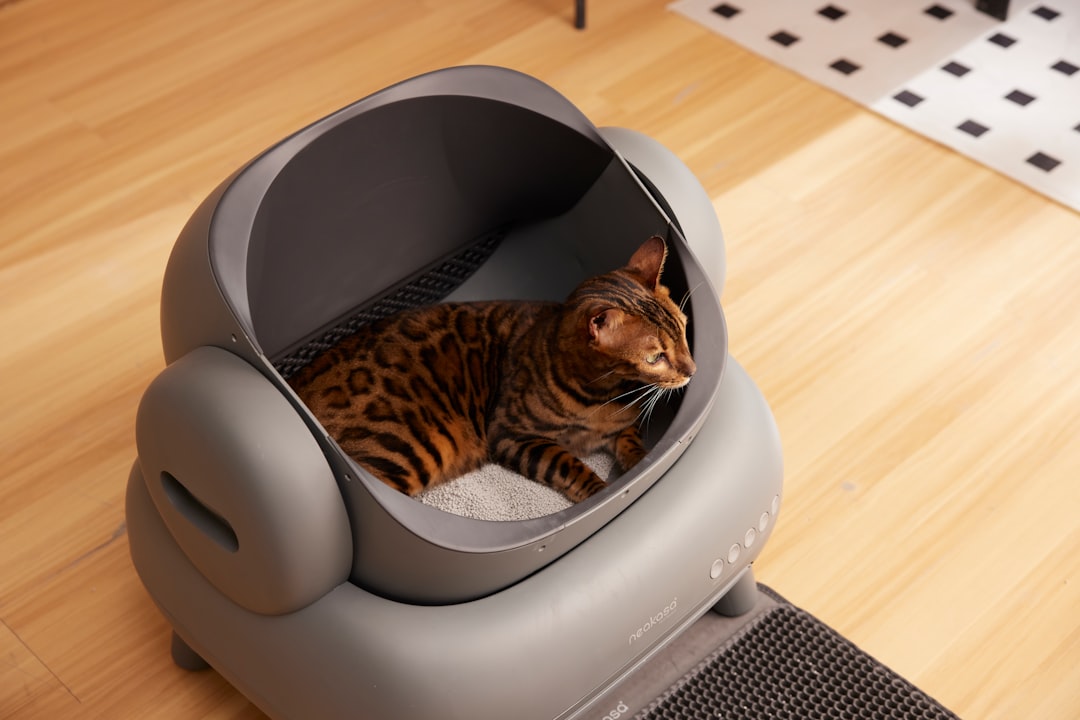
Automatic cat litter boxes are the most mechanically complex smart pet product on the market today. A single unit combines a brushless motor, a drum or rake mechanism, multiple sensors, a microcontroller, a WiFi radio, a battery or mains adapter, and firmware that coordinates all of the above to detect when the cat leaves and run a cleaning cycle safely. For a B2B buyer, understanding how automatic cat litter boxes actually work is the foundation for evaluating which models are worth sourcing and which are cheap imitations. This article explains the technology inside the 3 main families of automatic cat litter boxes, written from Hefei, China, by Eviehome (Hefei Ecologie Vie Home Technology Co., Ltd.).
The dominant architecture in 2026. A sealed drum holds the clumping litter on its inside surface. After the cat exits, the drum rotates 180 to 270 degrees. During the rotation, the clumped waste is pushed against a grille that sifts the clean litter back through, while the clumps fall into a sealed waste drawer below the drum. The drum then rotates back to its home position, ready for the next use.
Advantages: fully automated, no moving rake arm that can jam, sealed waste drawer contains odor, compatible with standard clumping clay litter (which is what most cats already use).
Disadvantages: high mechanical load on the drum bearings over tens of thousands of cycles, requires reliable cat-presence detection to avoid rotating while the cat is inside.
This is the architecture used by 12 of the 14 cat litter box models Eviehome manufactures.
An automated rake arm moves across the litter bed after each use, pushing clumped waste into a collection area at one end. Requires crystal litter (silica gel) or clumping litter, depending on the specific design. The rake architecture is mechanically simpler than the rotating drum (fewer moving parts, no large motor) but has a higher rate of mechanical jams because the rake has to push through variable litter resistance.
Advantages: lower unit cost, smaller footprint, simpler mechanics.
Disadvantages: jam-prone, less satisfying cleaning results for multi-cat households, depends heavily on the cat’s litter usage pattern.
The premium segment. The box connects to a household water line and a drain. After each use, water rinses the waste through the drain pipe, and a mild detergent or deodorizer cleans the tray. Requires plumbing installation (not plug-and-play) and compatible flushable litter or pellets.
Advantages: no waste to empty manually, no consumable litter refills.
Disadvantages: expensive (USD 600 to USD 1 200 retail), complex plumbing, limited to installations where plumbing is available, fragile electronics in a wet environment.
Flushing boxes are a niche with strong margins in premium Japanese and South Korean markets but limited mainstream appeal in the US and EU.
The heart of the rotating drum box. Rotates the drum through its full cleaning cycle in 60 to 180 seconds. Brushless DC (BLDC) motors are the current standard because they are quieter, longer-lasting and more energy-efficient than brushed DC motors. Quality BLDC motors for cat litter boxes are rated for 50 000+ cycles (equivalent to about 4 years of twice-daily use). Cheap BLDC motors cut corners on bearing quality and wire gauge and fail at 10 000 to 20 000 cycles.
Reduces the motor’s high RPM to the slow, high-torque rotation needed to turn a 6 to 10 kg drum full of litter. Typically a 2-stage or 3-stage planetary gearbox. The gearbox quality determines the noise level during the cleaning cycle. Premium boxes hit 40 to 45 dB (whisper-quiet). Budget boxes hit 60 to 70 dB (loud enough to scare the cat away from the box entirely).
The safety-critical component. A weight sensor under the drum detects when the cat is inside (weight above 1.5 kg triggers “occupied” state) and delays the cleaning cycle. An infrared beam at the entrance detects cat re-entry during cleaning. Premium boxes use dual sensors (weight + IR) and sometimes a third optical sensor for redundancy. Budget boxes use a single weight sensor which has a higher false-trigger rate.
Without reliable cat-presence detection, the drum can rotate while the cat is inside, which causes injury, bad reviews and Amazon listing removals. This is the number one reason Eviehome invests in dual-sensor architecture on every model.
The brain of the box. Coordinates the motor, the sensors, the app communication and the safety logic. In 2026, the standard is an ESP32 or similar WiFi-enabled microcontroller from Chinese SoC vendors. The firmware is either custom-written or based on the Tuya smart home platform (the mainstream choice). Tuya firmware comes with a pre-built mobile app that factories can white-label for a small royalty per unit.
Ranges from passive (carbon filter in the waste drawer) to active (UV light, ozone generator, automated deodorizer spray). Premium boxes sometimes use sealed waste drawers with pre-installed deodorizer pouches and a one-way valve that only opens during the waste transfer. Odor control is the number one customer-visible feature after the “automatic” claim itself.
Mains adapter (standard, 12V or 24V DC output at 1 to 3 amps), sometimes with a rechargeable battery backup for power outages. The adapter must be UL or CE listed for legal sale in the US and EU. Battery backup is a premium feature that adds USD 5 to USD 10 to the unit cost but is a strong selling point for customers worried about power outages affecting their cat’s hygiene.
A smart cat litter box’s firmware has to manage 5 concurrent tasks:
The safety state machine is the most important part. A properly designed state machine ensures that the drum can never rotate while the cat is inside, even in edge cases like sensor failure, power glitch, or firmware bug. Testing the safety state machine is a significant part of Eviehome’s in-process quality control.
The user-facing part of the system. A typical cat litter box app includes:
Apps are either branded white-label Tuya (fast to market, generic UX) or custom-native (higher cost, differentiated UX). The decision depends on your brand positioning.
Clumped waste gets stuck between the drum and the grille, preventing rotation. Premium boxes detect the increased motor current, stop the cycle and trigger an “error: drum jam” notification. Budget boxes just burn out the motor.
The cat jumps back into the box during cleaning. Dual sensors detect the weight change, the motor stops within 0.5 seconds, and the drum reverses to release the cat. Budget boxes with single sensors have higher failure rates here.
A sensor stops working due to wire damage or calibration drift. Premium firmware treats sensor failure as “occupied” (fail-safe) and refuses to rotate. Budget firmware treats it as “not occupied” (fail-open) and can rotate while the cat is inside.
Power cuts mid-rotation. Premium boxes have a non-volatile memory that remembers the drum position, and on power restore they complete the cycle safely. Budget boxes restart from an unknown position which can damage the gearbox.
The home WiFi goes down. Premium boxes continue to operate fully locally: the safety state machine does not depend on the cloud connection. Budget boxes that rely on cloud control for every cycle stop working entirely.
A quality brushless DC motor rated for 50 000 cycles lasts about 4 to 6 years of typical 2 cleanings per day. Budget motors rated for 15 000 to 25 000 cycles last 2 to 3 years. The motor is the most common failure point; most manufacturers ship replacement motors as spare parts for warranty service.
Most cats do after a 1 to 2 week adjustment period. The main rejection factors are noise during cleaning (cheap boxes are loud) and unfamiliar size (the drum is bigger than traditional litter trays). Premium boxes solved both issues by 2024.
Yes. Most factories (Eviehome included) offer white-label Tuya app branding at no extra cost for orders above 500 units. A fully custom native app costs USD 15 000 to USD 40 000 one-time, amortized over your first production run.
Eviehome manufactures 14 models of automatic cat litter boxes across entry, mid-range and premium tiers. All models use dual-sensor safety, brushless DC motors and Tuya-compatible firmware. Based in Hefei, China since 2014. See our definitive B2B buyer’s guide for automatic cat litter boxes for the full specification framework and our OEM and ODM services page for customization scope.
Contact Ryan Lau at ryanlau@eviehometech.com, on WhatsApp at +86 199 5653 0913, or use the contact form.