Smart Vending Payments, Telemetry and Cybersecurity Checklist
Smart vending cybersecurity decisions should begin with the project owner's use case,…

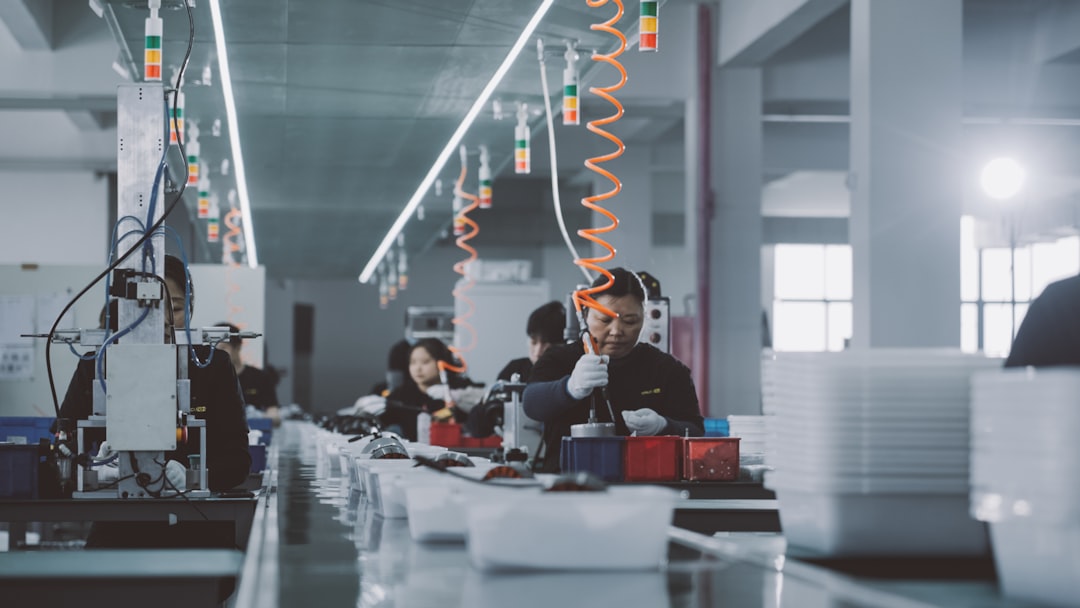
Every B2B buyer who imports pet products from China should have a mental checklist of the red flags that should make them walk away from a supplier and the green flags that should make them lean in. This article gives you the exact list we use at Eviehome when we evaluate our own component suppliers, and that we recommend to any buyer qualifying us or any other Chinese pet products manufacturer. Written from Hefei, China, by Eviehome (Hefei Ecologie Vie Home Technology Co., Ltd.).
The presence of these 8 signals does not guarantee a good supplier, but their absence is a warning. A serious factory with multi-year export experience hits at least 6 of 8.
A factory with a 3+ year business license has survived at least one full economic cycle and built a base of repeat customers. The registered capital (capital social) on the license is a rough proxy for the factory’s financial stability: for pet products manufacturing, expect at least 1 million RMB, ideally 5 million RMB or more.
A factory with a valid export license can invoice and ship on its own to any destination. A factory without an export license has to route every shipment through a third-party export agent, which adds 1 to 3 percent to your cost and adds a point of failure. Multi-country shipment history (EU, US, UK, AU buyers) means the factory has already solved the certifications and Incoterms maze for your market.
A real export-focused factory has a foreign trade team that answers every serious inquiry in English within 24 business hours, during Beijing business hours (GMT+8, 09:00 to 18:00 weekdays). If your first email goes unanswered for 3 days, the factory is either overwhelmed or not actually set up for international B2B.
A legitimate factory charges a sample fee (usually USD 50 to USD 500 including air shipping) and sends the sample within 5 to 10 business days. A factory that refuses samples, or charges extortionate sample fees (USD 2 000+), or takes 6 weeks to ship a sample is telling you that it either does not have inventory of the model you asked about or does not want retail-scale buyers.
The factory provides CE, FCC, ROHS or similar certificates on request, each with a unique reference number issued by an accredited test lab. You can verify the certificate number on the lab’s public portal (SGS, Bureau Veritas, TUV, Intertek, CMA, PRMS). If the factory sends a stamped PDF with no reference number, or a reference number that does not exist on the lab website, walk away.
When you ask for a live video tour of the factory on WeChat or WhatsApp, the response is “yes, when can we schedule it?” not “we can send you more photos instead”. Eviehome offers video tours to any serious buyer during the sample approval phase. See our About Us page where we show the real footage from our Hefei production lines.
The factory accepts the B2B standard of 30 percent T/T deposit before production and 70 percent balance against bill of lading copy. Large factories sometimes offer O/A 30 or L/C at sight for established customers. A factory demanding 100 percent upfront is either desperate for cash or a scammer.
The factory can introduce you to one or two current international distributors for a reference call (after checking non-compete with those existing customers). A factory with 5+ years of export experience always has this network. A new factory does not, which does not mean it is bad but adds risk.
There is no magic discount in Chinese manufacturing. If your lowest quote is 30 percent under the rest of the market for the same specification, the supplier is either using lower-grade components (cheaper motors, lower-capacity batteries, non-certified adapters), planning to bait-and-switch on the second order, or running a pure scam. A lower price is not automatically bad, but 30 percent below is almost never real.
The factory demands the full payment before production starts and refuses to negotiate. This is the single biggest red flag in Chinese sourcing. Standard is 30/70 (30 percent deposit, 70 percent against bill of lading copy). A supplier that cannot accept standard terms has working capital problems or is planning to take your money and disappear.
When you cross-check the business license on the official registry at gsxt.gov.cn, the registered address is a residential apartment or a virtual office. A real factory has a real factory address in an industrial park, with a specific building and floor. Virtual office addresses are used by trading companies and shell entities.
You ask for a live video call to walk through the production line. The supplier refuses or keeps postponing. Every real factory does this without a second thought. A refusal is almost always a sign the supplier is not a factory.
A reverse image search on the “factory photos” the supplier sent you shows the same images on other Alibaba pages, on stock photo sites, or on unrelated websites. This is the signature move of trading companies that do not have their own facilities.
The invoice lists the factory’s bank account. At the last minute, the supplier asks you to wire the money to a different account (often Hong Kong or offshore). This is a classic fraud pattern. Never pay to an account that does not match the invoice company name exactly.
The supplier sends a CE certificate for “pet products” without the specific model number, or the model number on the certificate does not match the product you are buying. Real certificates cover a specific model and a specific test standard. Walk away.
Before you send any RFQ to a new Chinese supplier, run this 30-minute routine:
If the supplier passes all 6 checks, they make it to your shortlist. Send them an RFQ, request a sample and move to the next phase.
When a new B2B buyer qualifies us as a potential supplier, we routinely provide:
Upload the image to Google Images, TinEye, or Yandex Images. Yandex is often the most useful for Chinese content. If the same image appears on 3+ other Alibaba pages or 5+ other websites, the supplier did not take it themselves.
Reference call refusal is a yellow flag but not a dealbreaker. Many established B2B relationships are protected by NDAs that prevent direct customer introductions. In that case, ask the supplier to provide a LinkedIn connection to a current customer contact, or ask for a pre-signed reference letter. A complete refusal with no alternative is a red flag.
For a first order between USD 10 000 and USD 50 000, budget USD 400 to USD 800 on a third-party factory audit plus USD 100 to USD 500 on sample fees. That is 0.5 to 3 percent of the order value and it is the cheapest insurance you will ever buy against a bad supplier choice.
Eviehome (Hefei Ecologie Vie Home Technology Co., Ltd.) has been manufacturing smart pet products in Hefei, China since 2014. We welcome full supplier verification from any serious B2B buyer: business license, export license, 24 certifications on our quality page, video factory tours, reference customer calls. See our OEM and ODM services page and our verified buyer reviews page.
Contact Ryan Lau at ryanlau@eviehometech.com, on WhatsApp at +86 199 5653 0913, or use the contact form.