Smart Vending Payments, Telemetry and Cybersecurity Checklist
Smart vending cybersecurity decisions should begin with the project owner's use case,…

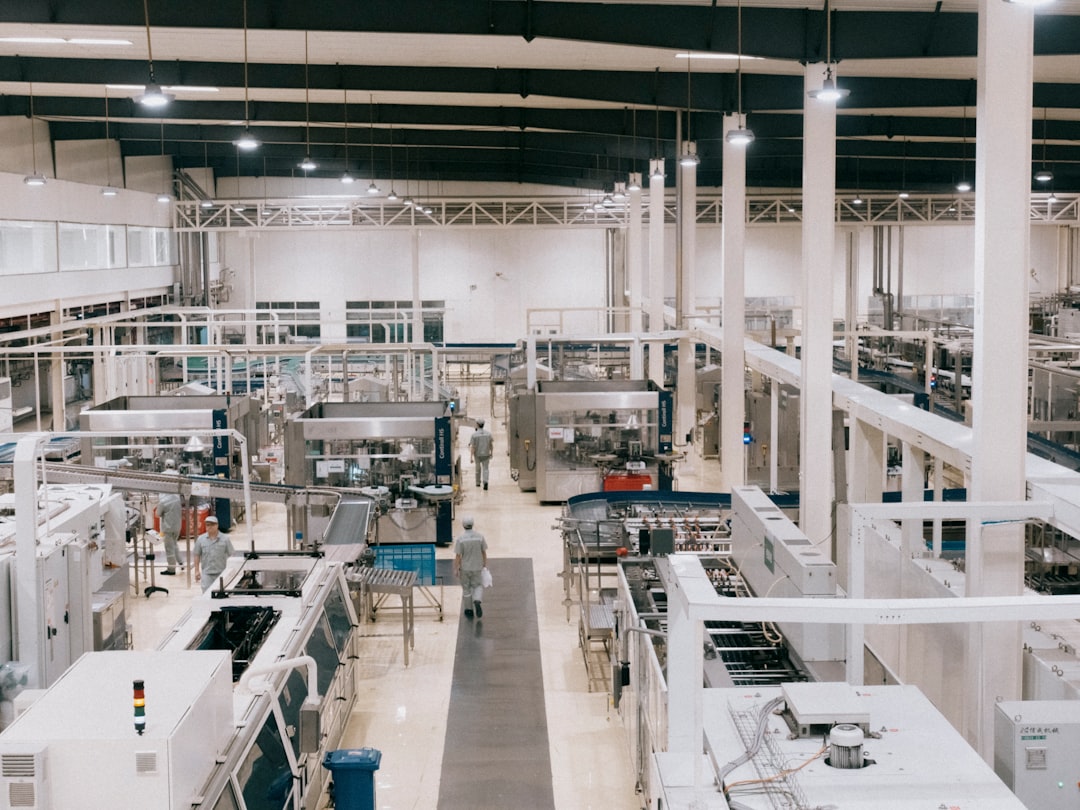
Your first order from a Chinese pet products factory is the one that sets the template for every order that comes after. Get it right and you have a repeatable process, a qualified supplier and a base of inventory that sells. Get it wrong and you learn every lesson the expensive way. This article walks through the exact step-by-step sequence we recommend at Eviehome (Hefei Ecologie Vie Home Technology Co., Ltd.), based in Hefei, China, for a first-time B2B buyer placing their inaugural pet products order in China.
First-time buyers almost always try to split their first order across 3 or 4 SKUs to “test the market”. This is a mistake. The first order is not a market test, it is a supplier test. You are validating whether the factory can deliver quality, on time, on budget. One SKU lets you focus every hour of attention on that one product and learn everything you need to learn.
Pick the SKU that you have the highest conviction about: the one your customers have asked for, the one that has a visible gap in your local market, or the one that has the clearest hero product potential. Everything else waits for order 2.
Before you send an RFQ, write a 1-page specification document for the product you want. Include:
Send the same specification to 3 to 5 factories. Compare the responses on clarity, speed and price.
From the 3 to 5 factories you sent the spec to, pick the 2 whose responses were the best (not just cheapest). Run the full diligence framework on both:
See our detailed complete sourcing guide for the full diligence framework.
When the sample arrives, do not put it on a shelf. Actually test it in real conditions. For a smart pet product, that means:
This is the single most important step in the first-order process. Most failures in B2B pet product sourcing happen because the buyer skipped or rushed the sample test.
Once the sample passes, go back to the factory with a written proforma invoice request. The proforma invoice (PI) should list:
Review the PI carefully before paying anything. This document is your contract.
Wire the 30 percent deposit via T/T (telegraphic transfer, the Chinese term for international bank wire). Double-check the bank account details: the beneficiary name MUST match the factory’s official business license name exactly. Any discrepancy is a scam red flag. Expect the deposit to take 2 to 4 business days to clear.
Once the deposit lands, the factory starts production. From this moment, your inventory is being built.
Do not skip this. Book a third-party pre-shipment inspection by SGS, Bureau Veritas, TUV or QIMA. Cost: USD 300 to USD 500. Timing: 2 to 3 days before the scheduled shipment date. The inspector visits the factory and runs an AQL 2.5 sampling check on the finished goods: packaging check, functional test, dimensional check, product markings verification, quantity count.
You get a 10 to 20 page report with photos. Release the balance payment only after the inspection report is green.
Once the inspection passes, the factory sends you a copy of the bill of lading (BL) after loading the container. You verify the BL matches the PI (quantities, ports, consignee) and then wire the 70 percent balance. The factory releases the original BL to you or your forwarder, which lets the container be cleared at the destination port.
Your customs broker clears the shipment at the destination port. Provide:
Customs clearance typically takes 2 to 5 business days for pet electronics in the US, 3 to 7 days in the EU.
When the container arrives at your warehouse, count the cartons, open 5 to 10 boxes randomly and verify the content matches the PI. Take photos of the packing, the products, any damage. Log everything in your procurement record. If there are quality issues, flag them to the factory within the window specified in your contract (typically 14 to 30 days after delivery).
Total: 16 to 18 weeks from first RFQ to first inventory on your shelves for a US West Coast buyer. Add 2 to 4 weeks for EU or US East Coast destinations due to longer ocean freight.
Realistic budget for a first 500 unit order on a mid-range SKU: USD 35 000 to USD 60 000 landed cost, including the product, ocean freight, insurance, duties, customs broker fees, inspection and last mile delivery. Plan for USD 50 000 as a safe planning number.
This is where the pre-shipment inspection protects you. Your contract with the factory should include a quality clause allowing you to refuse the shipment if the AQL 2.5 inspection fails. In practice, a reputable factory will rework or replace the defective units before re-inspection. A bad factory will try to ship anyway. Walk away from bad factories during the qualification phase, not after the deposit is paid.
Yes, most first orders are done remotely. The combination of video tour + sample test + third-party inspection gives you enough verification without an in-person visit. Visits are useful but not mandatory for a first order.
Negotiate this upfront in your PI: the factory typically ships 2 percent of your order quantity as spare parts (motors, PCBs, adapters, cables) at no extra cost. You use these spares to service warranty returns for the first 12 months. For units that cannot be repaired with spares, the factory offers a 50 percent discount on replacement units within the warranty window.
Eviehome (Hefei Ecologie Vie Home Technology Co., Ltd.) has been guiding first-time B2B buyers through their first Chinese pet products order since 2014. We accept orders from 100 to 200 units on selected trial SKUs, all the way up to full container OEM programmes of 5 000+ units. Based in Hefei, China. See our OEM and ODM services page for the full process, our shipping page for Incoterms and lead times, and our certifications page for the full compliance file.
Contact Ryan Lau, Foreign Trade Manager, at ryanlau@eviehometech.com, on WhatsApp at +86 199 5653 0913, or use the contact form.